- Writing sample
- 01 of 15
- Written for
- Comparison article
- Topic
- SaaS & eCommerce Payments
- Length
- 1,214 words, 5 min read
Payments are an integral part of running an e-commerce website or an online store. A lot of clients will flock to your site if you offer them payment methods most comfortable for them.
Every customer wants to make payments smoothly, with the minimum levels of fuss, and also in a safe manner. If you can provide a suitable payment method, there is no doubt that you will be able to catch the attention of many customers.
However, when it does come to payments, there are a plethora of platforms and methods for you to choose from.
While not all may not be suitable, there are a few that are very popular. Two of these are Shopify and Stripe.
TL;DR:
- Go with Shopify if you want an all-around e-commerce platform integrated with exclusive payment options
- Go with Stripe if you want a transaction platform that can be integrated into different e-commerce platforms.
Below, we will draw out a comparison of the two, and try to bring out their best features to help you make the best possible choice.
So read on, and see which platform suits you best!
Shopify vs Stripe - Which One Should You Choose?
As already mentioned before, the two platforms we will be discussing are Shopify and Stripe. Both are unique in their ways, so it is worth knowing the differences.
#1 Stripe
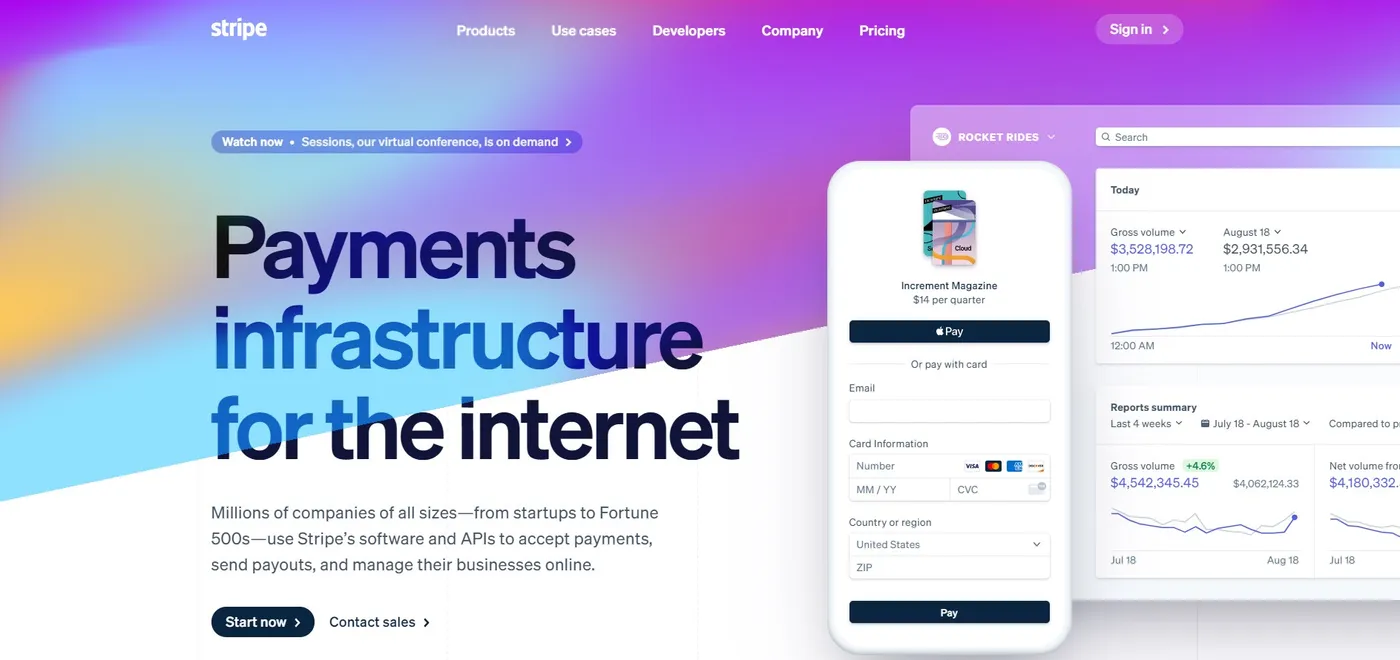
Stripe is a completely online payment platform. The only function it has is to ensure the transaction of money across the internet.
To do so, all you need to do is create an account on their homepage, and you will be given permission to make payments.
A special feature about Stripe is that you can add it to other e-commerce platforms and websites, and use it to make the payment.
#2 Shopify
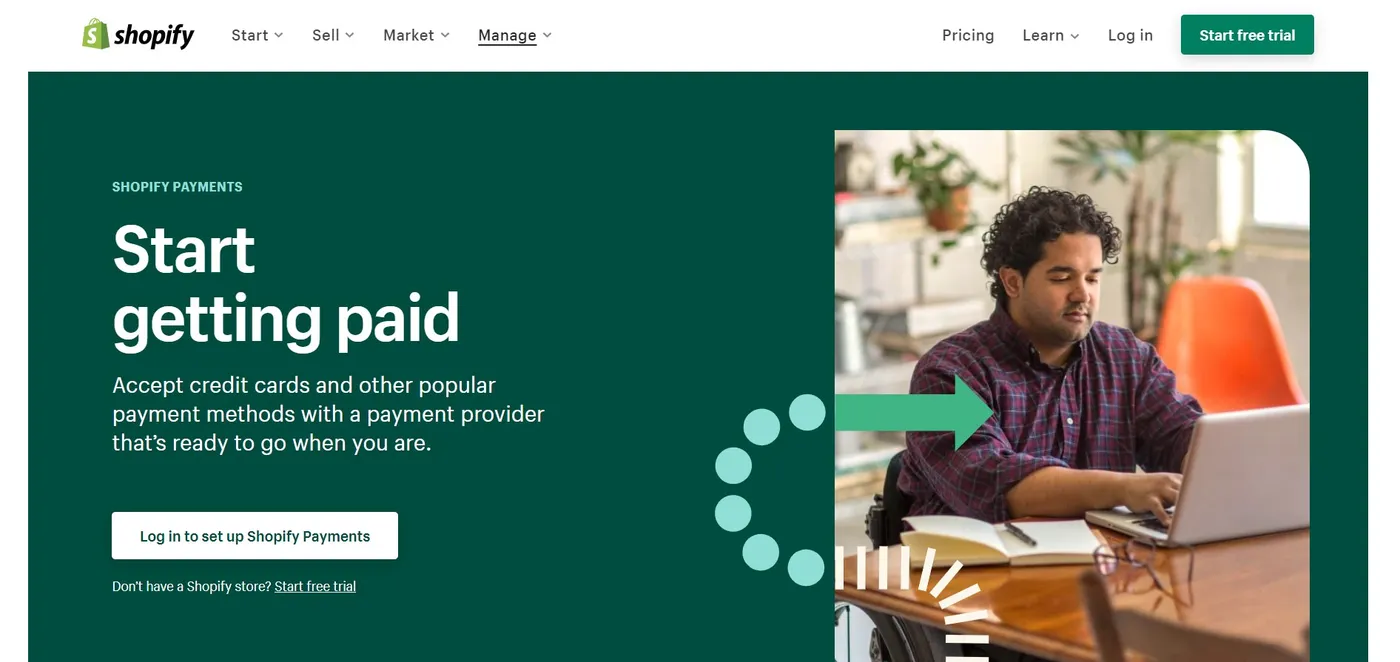
Shopify is a bit different from Stripe. It is primarily an e-commerce platform and not a payment platform.
This software allows you to create and customize your very own online store, using graphics, fonts, and other tools. With all this, it also allows you to make payments via the Shopify payments feature.
Important to note here is that the payment service offered by Shopify is their own and not a third-party one.
This is the main difference between stripe and Shopify. Stripe is a 3rd party payment platform, while Shopify provides its exclusive platform.
Now, let us get into some features of these two platforms, to get a better idea.
Stripe Features
Stripes' primary feature is that you can sign up relatively fast, and straightforwardly without much hassle.
Once signed up, you can go for the payment option almost immediately, and then start using the payment services.
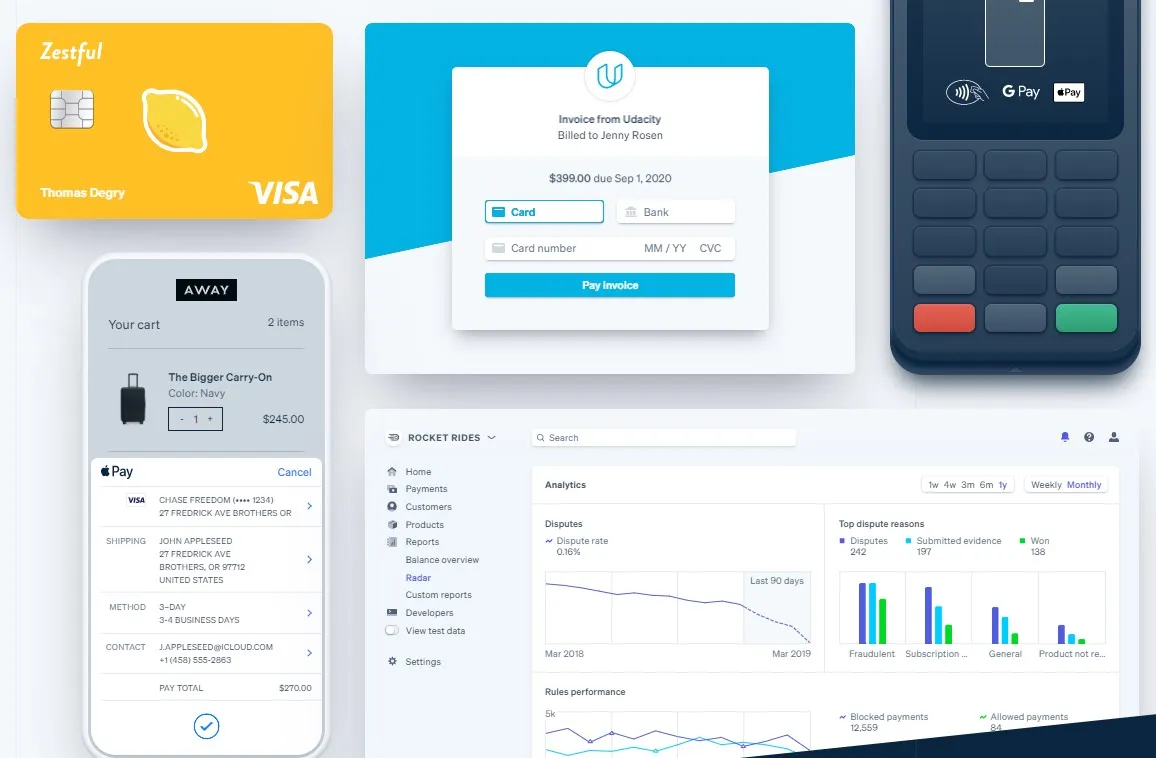
Moreover, there is no need to go through any legal process, or merchant acquisition to avail their payment feature.
When put in brief, Stripe offers you the following features:
- Ability to use both credit and debit cards to make payments.
- The use of other payment services like Google Pay and wallet.
- Acceptance of international currency on a very broad scale. Stripe accepts around 135 currencies, from all across the globe. This means that you can pay in almost any currency.
- Allowing wire transfers. These can also enable faster payments and secure transactions.
- Providing an embedded and secured checkout platform when you make payments from tablets or laptops.
- Offering a tool kit, so that you can create your very own payment form or invoice.
- Ability to integrate with over 400 other platforms and extensions. Some of these include BigCommerce, Xer, and Wave.
This is just the list of primary features that they offer. On top of that, Stripe also offers you customer support round the clock, every day of the week, via phone or email chat.
Shopify Features
Now let us come to Shopify. As mentioned before, Shopify is an e-commerce platform and not a 3rd party payment platform.
Shopify provides the whole package of setting up your online store, managing clients, lists, and products. It also allows you to accept payments, as well as join up with a lot of 3rd party payments platforms.

These include the names like WorldPay and PayPal. On top of that, Shopify also offers its very own payment platform, so you will not have to shift to 3rd party platforms if you do not want to.
The payment feature is only available in around 15 nations, but just like Stripe, it allows the flexibility of choosing which method of payment you prefer, such as credit/debit cards, online wallets, and so on.
Let us look at these features briefly:
- Allows the customization of online stores, and creates your checkout page. This can also be used to sell on social media sites like Facebook.
- All payments via Shopify are completely encrypted for the maximum possible safety.
- Notifications for payments can be adjusted as desired with adjustable settings.
- Fraud filters can be enabled.
- Tax settings are also customizable.
- Customers can also choose to pay in their local currency, and this covers around 85 currencies.
- Integration with PayPal is automatic, and there are also options to set up manual payment methods.
These were just the top features Shopify has to offer. In the upcoming, we will look at the benefits of each, and compare them.
Benefits Of The Two Platforms Compared
Here, we will take a brief look at how the two giants stack up against one another. We will present the results in a table for easier viewing and understanding.
| Stripe | Shopify |
|---|---|
| Can be used if you are only willing to make payments | If you are primarily dealing with eCommerce and online stores |
| Good for making customized payment forms | Makes it easier to handle payments alongside e-commerce activities |
| Can be used if Shopify payment features are unavailable or blocked in your country | Can be used if you do not trust 3rd party platforms as much, and want to work with a verified service only |
| If you want to make or accept payments in multiple currencies. You will have a wide list to choose from | Shopify has the benefit of being readily integrated with PayPal. For customers using PayPal, this is good news |
| If you want to make and accept payments specifically via invoice | Shopify provides lower rates of transactions when you upgrade to their advanced plans |
| You want to enjoy the customer service features at any time. | In-person, payments are a lot easier with Shopify. |
Payment Options
Before we conclude, let's have a quick look at the payment you will have to make when using either of these two platforms.
Stripe
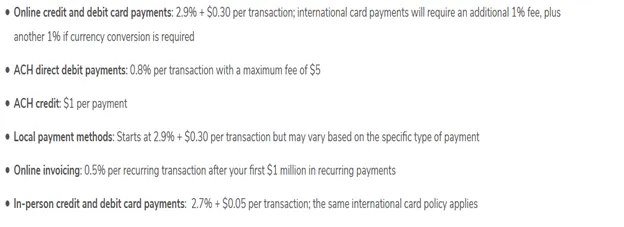
There is no monthly fee or sign-up cost here. The charges associated with transactions are as follows:
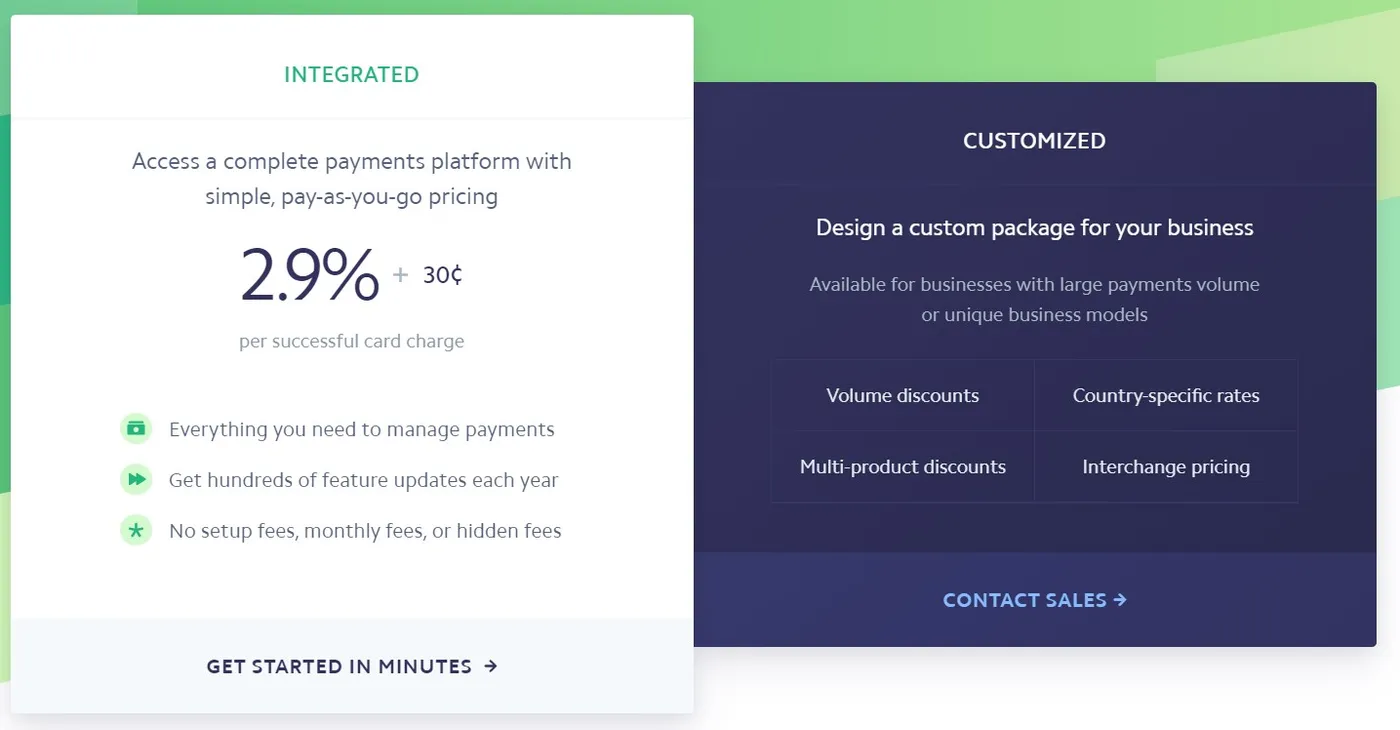
These are the transaction fees you have to pay for Stripe -
Shopify
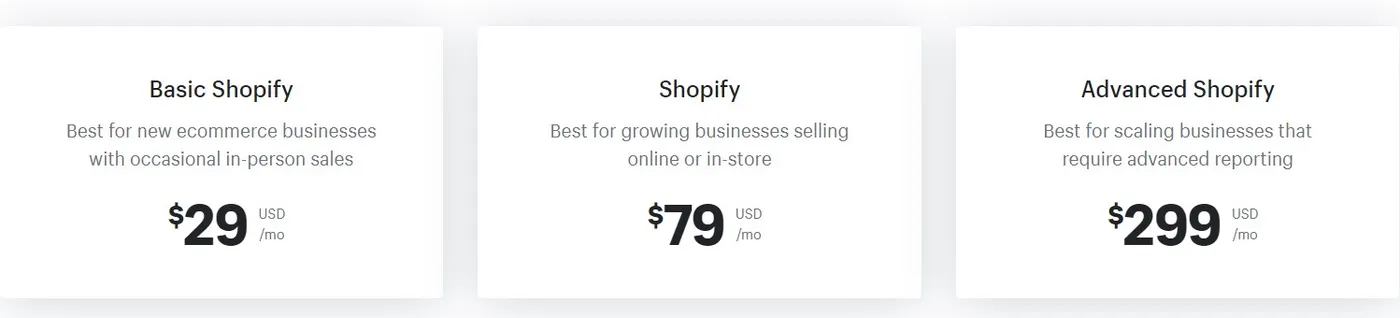
There is a subscription cost associated here. With three types of plans, the prices associated are as follows:
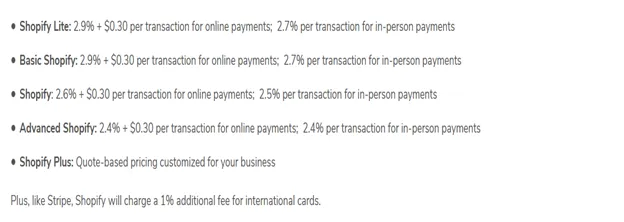
Also, just like Stripe, there are transaction fees that you will have to pay, and these are as follows:
Conclusion
With all this discussed, we hope you can make out which plan is better for you. If you are running or thinking of running an e-commerce platform or store, then Shopify payments are certainly the better plan for you. This makes sense and is financially viable.
If you are looking to make online payments only, without the need for e-commerce, then Stripe is not a bad option.
All in all, both have their pros and cons, so you will have to decide wisely.